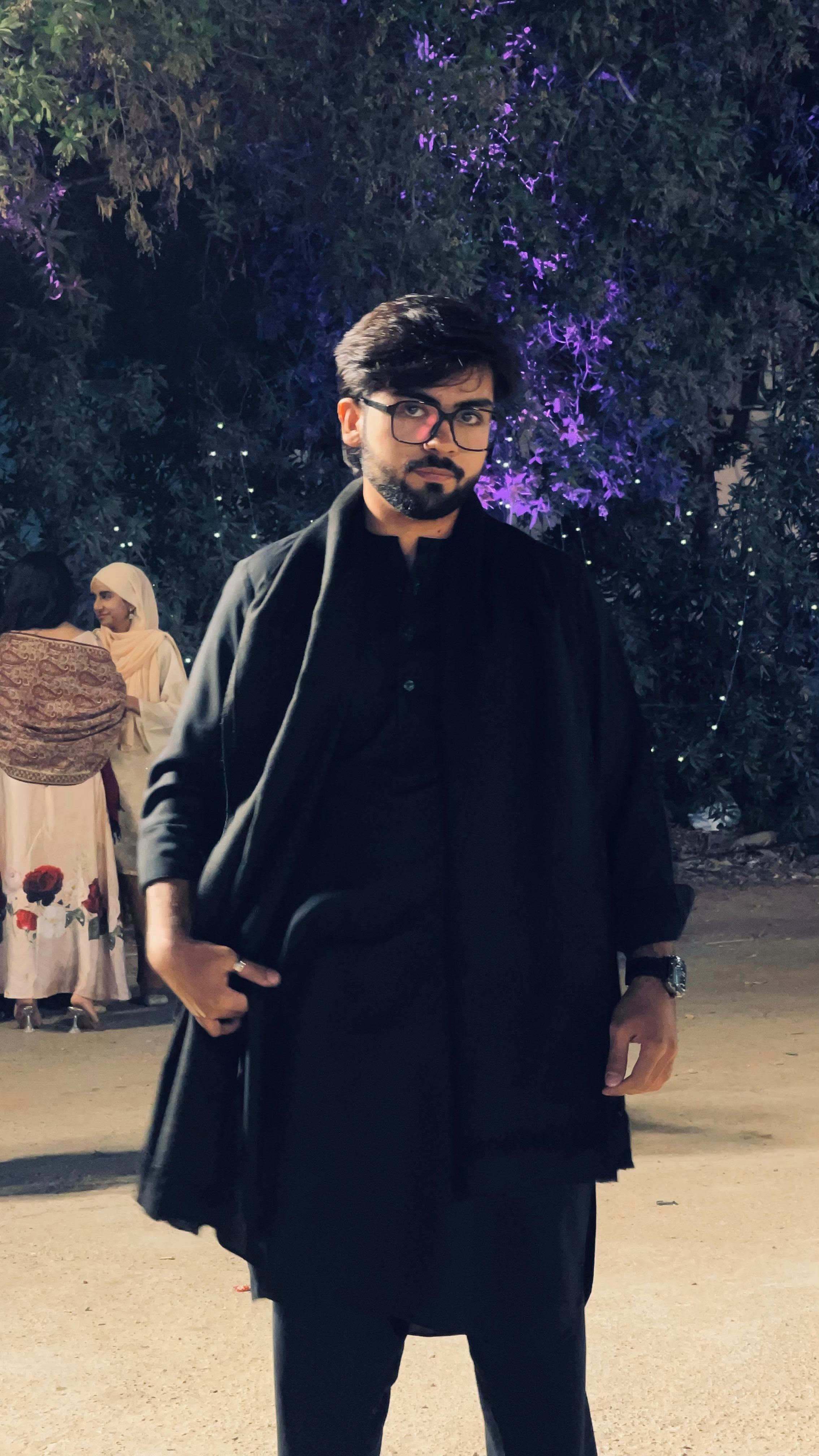
At only 19, Pakistani artist Muhammad Jarry Abbas is already building a body of work that feels less like a debut and more like an unfolding autobiography. His drawings do not simply depict figures or scenes; they act as emotional records—visual residues of moments lived, anxieties endured, and inner conflicts confronted.
Abbas began his artistic journey at the age of fifteen, when he received first position in a nationwide online sketching competition in the under-15 category. The recognition marked more than early success; it confirmed art as his chosen language. Since then, his practice has evolved into a deeply personal process of translation—transforming inner turmoil into images that invite viewers into spaces often left unspoken.
What distinguishes Abbas’s work is its commitment to psychological honesty. His pieces frequently orbit themes such as anxiety, delusion, and the complexities of emotional influence, particularly around the idea of manipulation. These are not decorative subjects, nor are they comfortably resolved. Instead, they surface through distorted forms, surreal environments, and expressions that hover between vulnerability and confrontation. Each composition feels like a fragment of a larger inner narrative—sometimes raw, sometimes dreamlike, always charged.
“My work reflects the shifting eras of my life,” Abbas explains. This sense of movement is crucial. His drawings do not present a fixed identity but an evolving one. The figures within his works often appear suspended between states—caught in psychological thresholds where certainty dissolves and emotion becomes form. Through this, Abbas suggests that personal growth is not linear but layered, marked by repetitions, returns, and re-imaginings.
Abbas is using figurative and surreal practices to explore mental and emotional realities. Yet his voice feels distinctly intimate. Rather than addressing spectacle, his work leans inward, using the human form as a site where memory, fear, and imagination intersect.
In Abbas’s world, art is not escape—it is exposure. A way of allowing what is hidden to take shape, to be seen, and finally, to be shared. As his practice continues to mature, what remains most compelling is this dedication to emotional truth. Each piece becomes a mirror—not only of who he was, but of who he is becoming.
And in that ongoing transformation lies the quiet power of Muhammad Jarry Abbas’s work.
The six selected works he presents from his journey demonstrate this range. Together, they map an emotional topography rather than a stylistic one. From pieces steeped in tension to those drifting into surreal introspection, they reveal an artist willing to confront discomfort and turn it into visual inquiry. There is a sense that each drawing is less an answer than a question—posed not only to the viewer, but to the artist himself.
The Painted Smile
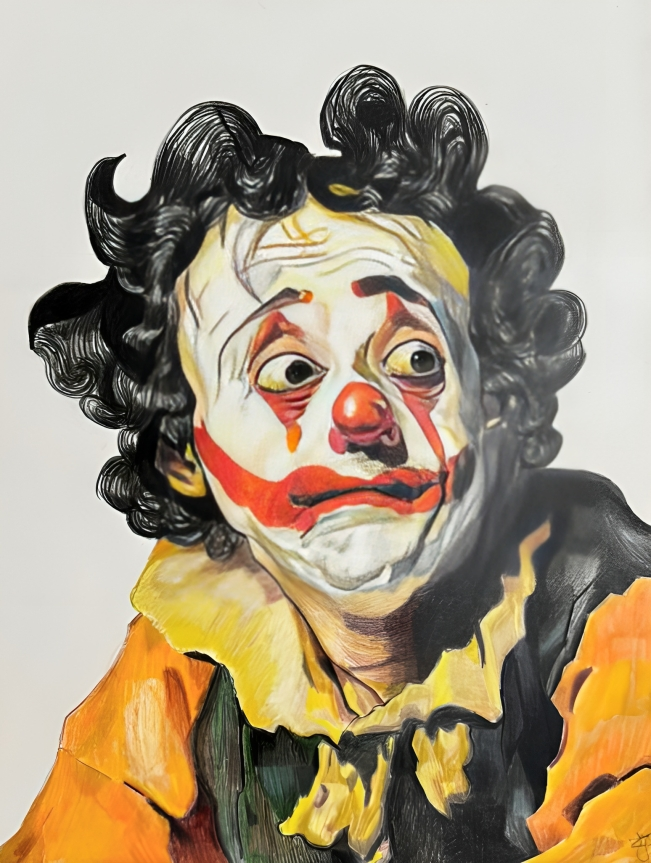
We all know that one friend—the life of the group, the one who hides their pain behind laughter. This artwork is dedicated to those clowns of real life, who carry the burden
of sadness but never fail to bring joy to others. The contrast of a painted smile with sorrowful eyes reflects the silent battles behind the laughter. A reminder that even the brightest smiles may mask the deepest struggles.
Fitoor
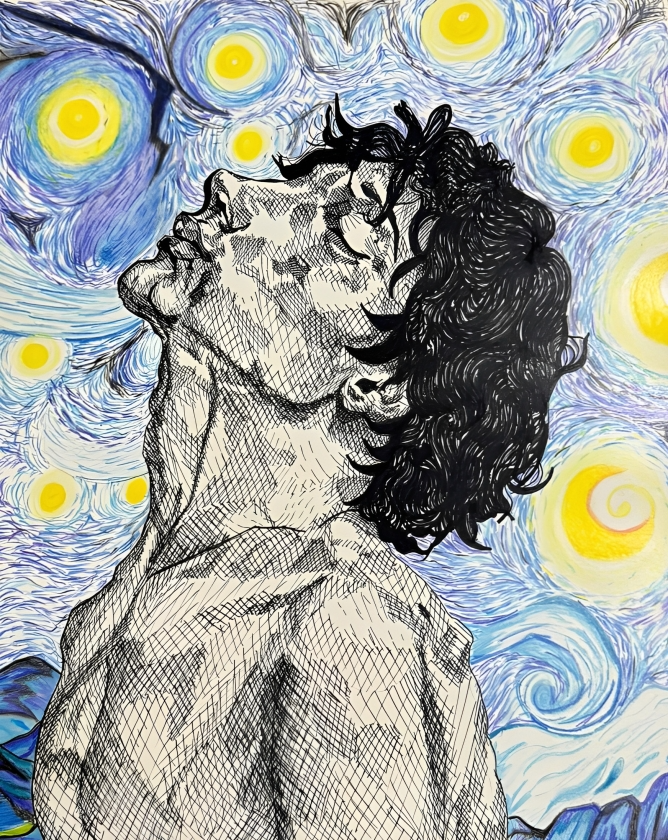
Lost in the haze of delusion, reality becomes distorted and fragmented.
This piece, ‘Fitoor,’ captures the tension between the harsh truth and the comforting fantasy.
The black and white figure, rendered in hatching, represents the disjointed and broken reality, while the dreamy night sky, inspired by Van Gogh’s ‘Starry Night,’ symbolizes the alluring escape into a world of obsession and infatuation.
As the figure gazes upwards, it’s as if they’re yearning for a reality that’s both captivating and unattainable.”
When your own self feels like “PARDES”
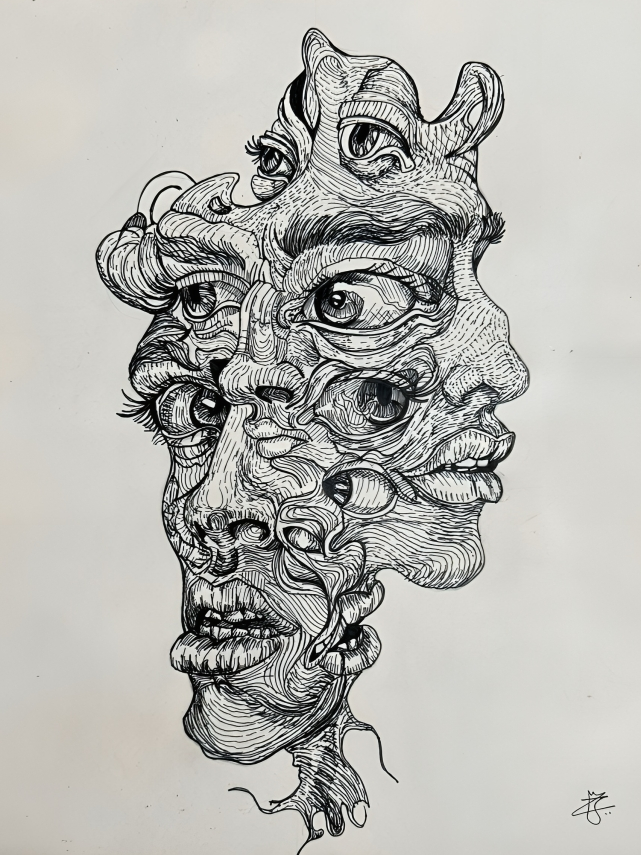
This haunting drawing captures the anguish of anxiety, where the self becomes a labyrinth of conflicting emotions and thoughts. The multiple faces, intertwined and distorted, convey the disorienting sense of being a stranger to oneself.
The artist’s masterful use of line and texture creates a sense of depth and complexity, drawing the viewer into the turmoil of the inner world.
Unseen Struggles: A Tribute to the Mediocre

This piece sheds light on the often-overlooked individuals who toil in the background, their efforts and struggles going unnoticed.
The drawing represents the ‘mediocre’ person, not as a derogatory term, but as a reflection of the many unsung heroes in our lives.
The subject’s wide-eyed expression and worn appearance convey a sense of quiet determination and resilience.
The Burning devotion
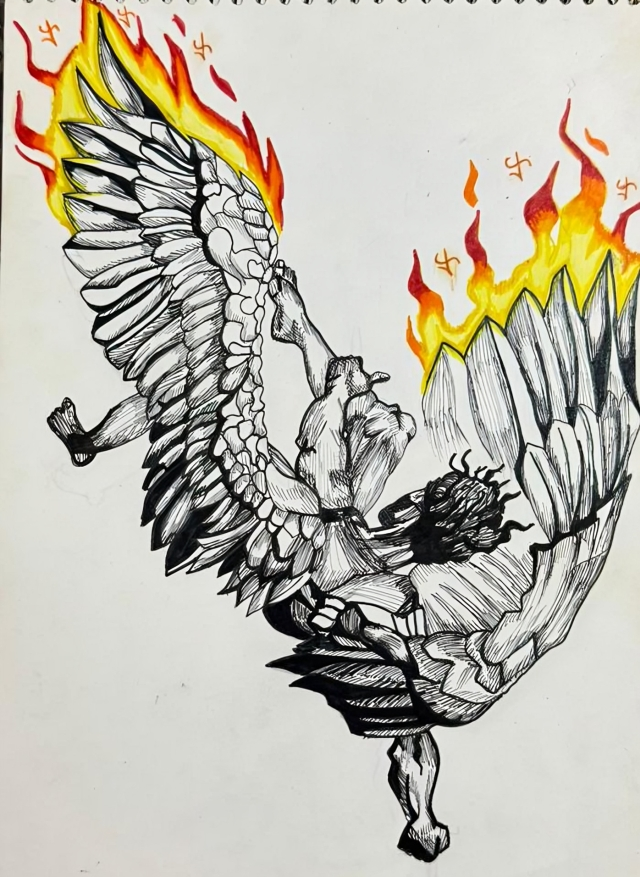
This artwork explores the complex nature of devotion, where intense passion and dedication can lead to self-destruction.
The deeper one falls into devotion, the more they risk losing themselves to the flames of their own desire.
The burning wings symbolize the sacrifice of one’s own identity, yet the peaceful expression suggests a sense of fulfillment, highlighting the paradox of surrendering to love.
Blind Love

This art explores the idea of a person or even the wisest of the person “getting blind in love” (a metaphor which means ignoring all the red flags ).
But the question is, is it really his fault or he’s a victim of female manipulation.
Follow more of his work by visiting his instagram profile
 artCollective Magazine