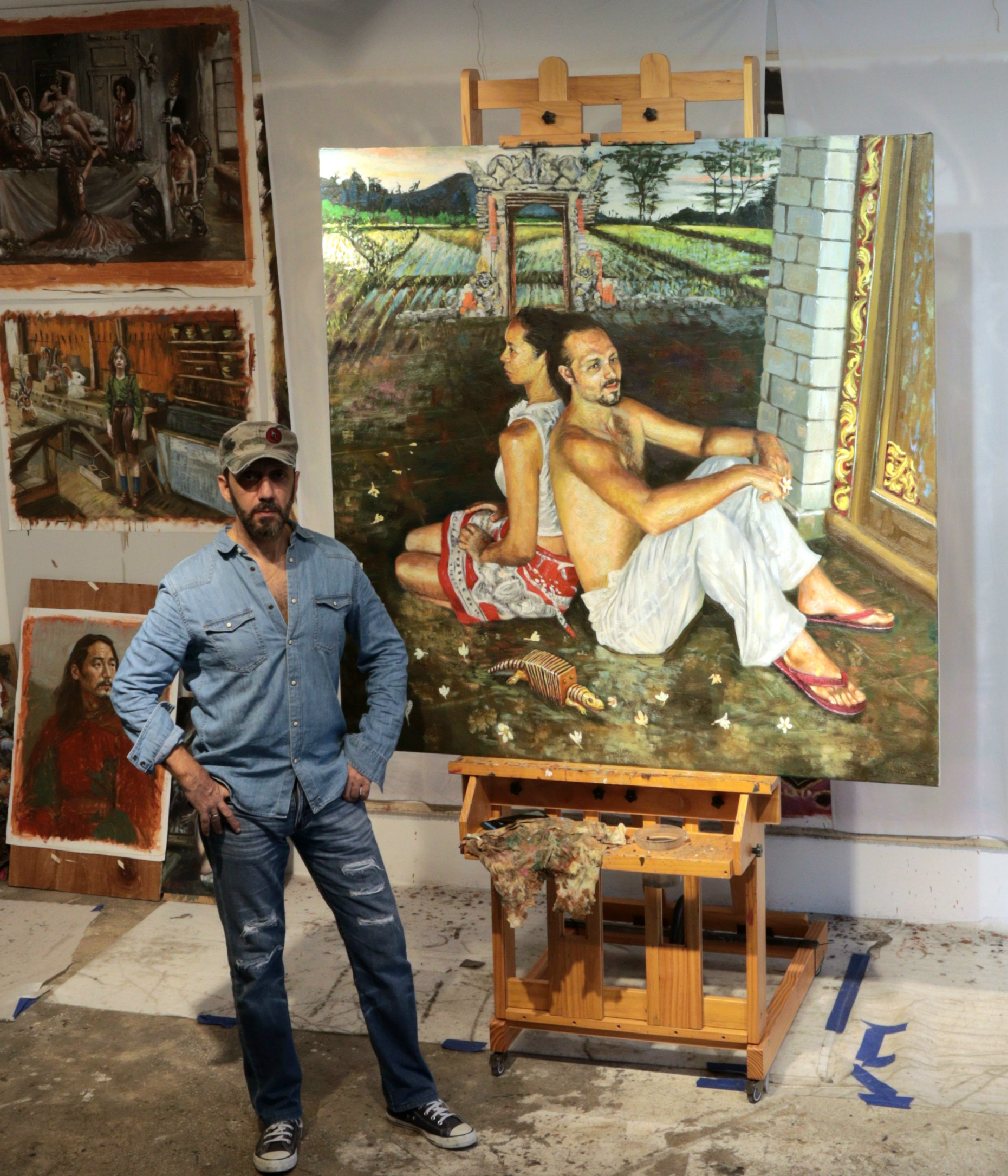
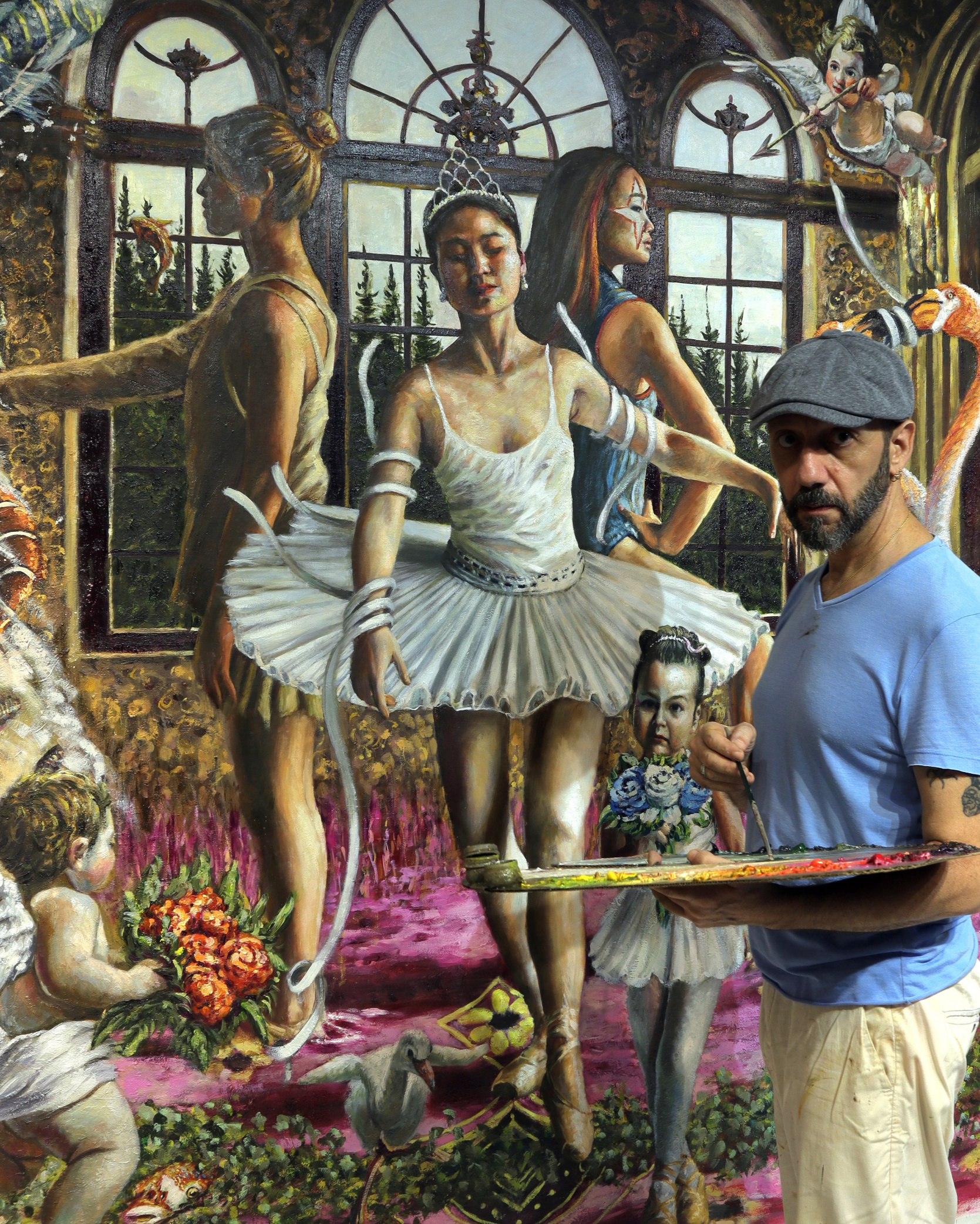
Meet Mario Balsamo, an Italian figurative oil painter whose studio practice now unfolds in Kuala Lumpur, Malaysia.
Working at the intersection of classical tradition and contemporary surrealism, Balsamo navigates the fragile terrain between reality and dream.
His paintings probe themes of memory, identity, and perception, often placing the human figure within shifting, imaginative landscapes that blur the line between the tangible and the subconscious. Drawing inspiration from Renaissance masters while embracing surrealist strategies, his work reveals both the vulnerability and resilience of human presence.
With exhibitions spanning Europe and Asia, and works held in private collections and international publications, Balsamo continues to refine a visual language that feels at once timeless and deeply personal.
Project Statement:
This selection of paintings belongs to a broader series exploring the fragile boundary between interior emotion and the external world. Each work emerges from a personal reflection or a dreamlike state, often blending symbolic elements, fragmented figures, and imagined architectures. Influenced by the writings of Carl Jung and the visual rhythm of Antonio Mancini and Rubens, these compositions aim to evoke a silent tension, where the viewer is invited to inhabit a psychological space rather than a physical one.
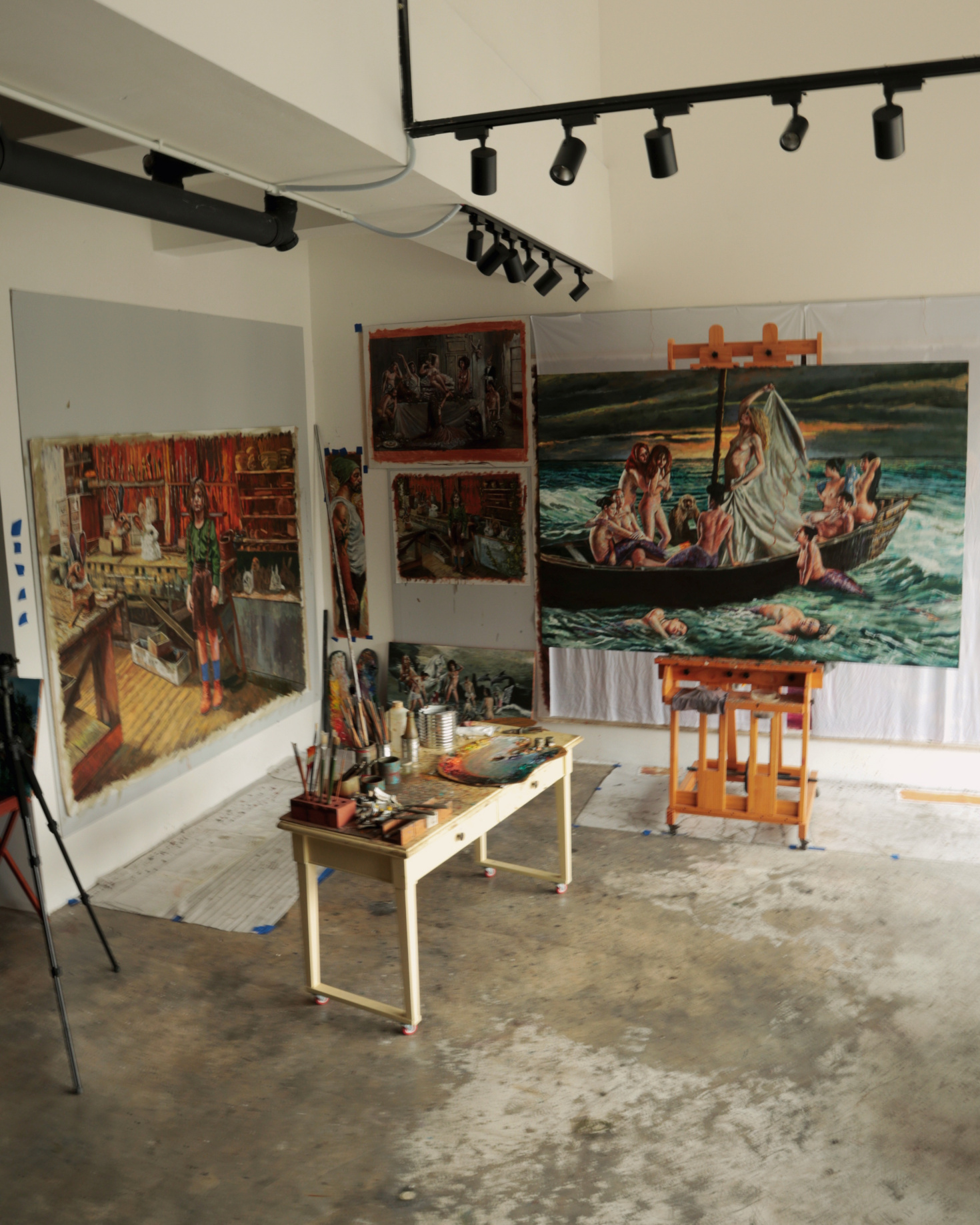
– How would you describe your style?
My work sits within the figurative tradition, at times with a touch of surrealism. I use the figure as a starting point but often disrupt it, fragment it, or place it in ambiguous spaces. I am drawn to the tension where reality begins to dissolve and the subconscious emerges. I am also interested in placing human figures and animals in enigmatic contrappositions, creating images that feel both familiar and strange. I would describe my style as a dialogue between classical technique and dreamlike invention.
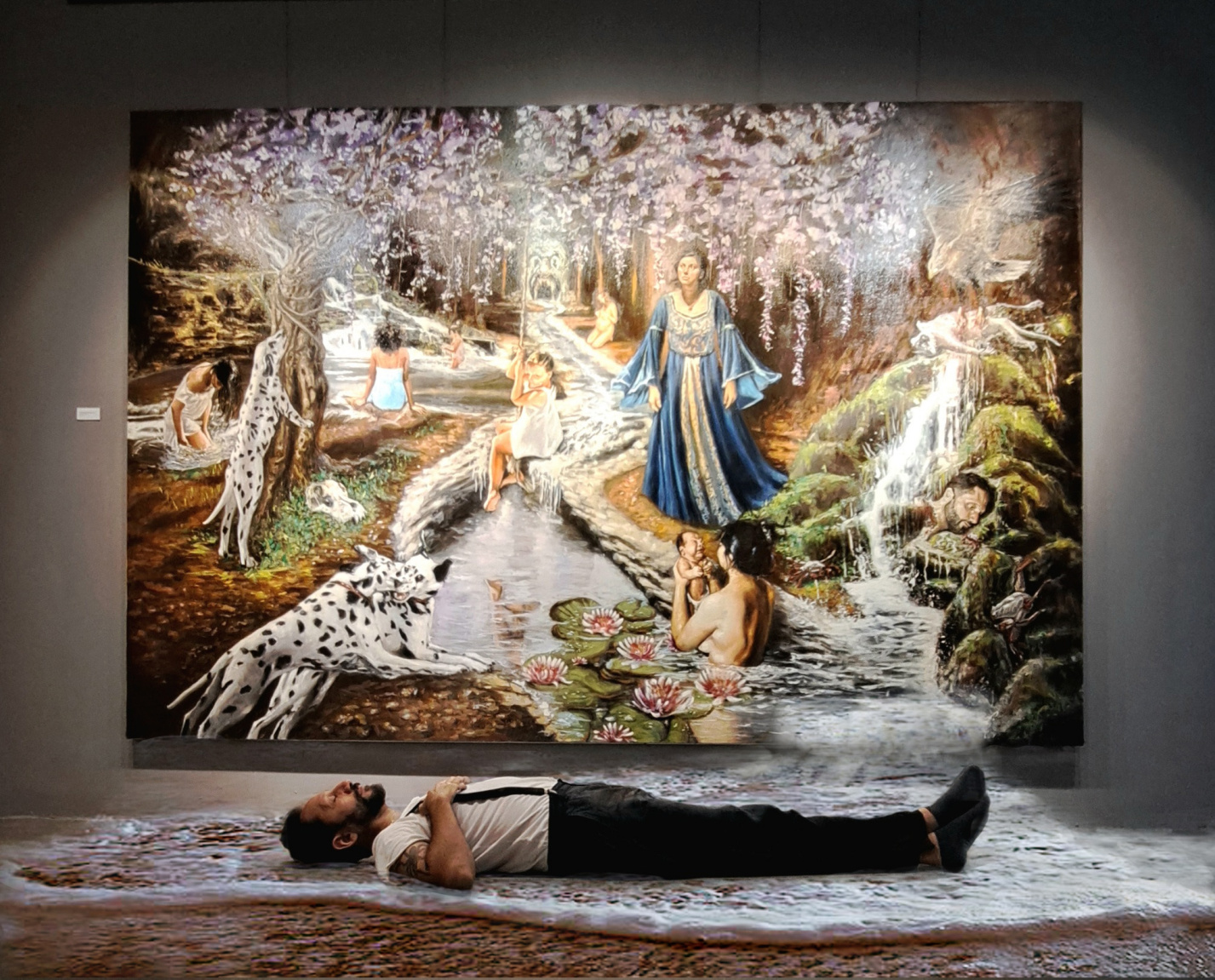
– How has living and working in Malaysia influenced your practice?
Moving to Malaysia gave me a sense of distance from the European art context where I was formed. That distance has been productive; it has allowed me to see my own work more clearly and to develop it without constant comparison. The tropical light, the intensity of the colors, and the coexistence of different cultural perspectives have also found their way, subtly, into my palette and atmosphere.


– What is your creative process and your technique?
It usually begins in my mind. I try to form as clear an image as possible before starting, often
supported by sketches or photographic studies, though I never follow them literally. The process is more about setting up a structure that I can then break apart. I work in oils using traditional layering techniques such as glazing, underpainting, and scumbling, which allow me to create depth and nuance. But the subject matter often comes from memory or intuition, so the final image is never fully planned. It unfolds on the canvas as I paint.
– You mention in your statement: “…the viewer is invited to inhabit a psychological space rather than a physical one“. What kind of emotional or mental response do you hope the audience will experience when encountering your work?
I hope for a sense of recognition, even if the image is unfamiliar. My goal is not to illustrate a specific story, but to open a space where the viewer can project their own memories, fears, or desires. Ideally, the paintings create a moment of silence, where the rational mind pauses and something more intuitive can surface.
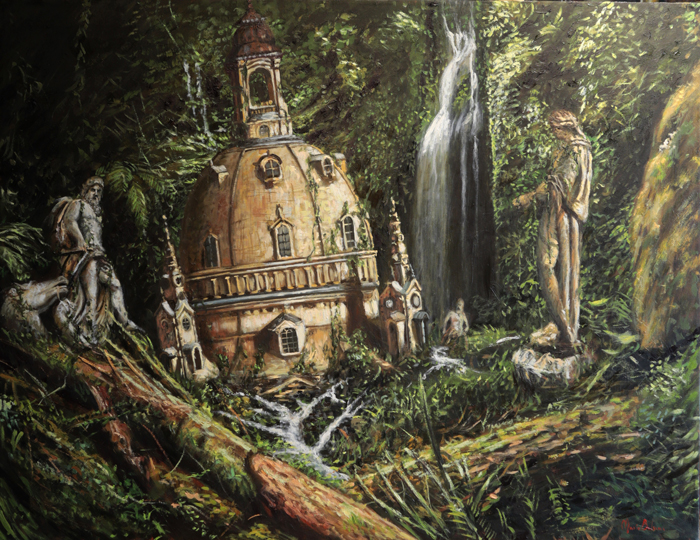
– Your work has been shown across Europe and Asia. Do you notice differences in how audiences from different regions respond to your paintings?
Yes, there are differences, but also surprising connections. In Europe, viewers often approach my work through art history and make references to classical or surrealist traditions. In Asia, however, the response tends to be more immediate and instinctive. People often connect to the emotional atmosphere or symbolic charge of the image without needing to anchor it in historical references. This direct way of looking has been very meaningful to me, as it opens up fresh perspectives on my own work. Yet in both contexts, the common thread is curiosity, the need to pause and look longer.
– What are your plans for the future? Do you plan any exhibitions or new projects?
At the moment I am developing a new body of work that continues my exploration of fragmented figures and shifting spaces, drawing more inspiration from classical painting while also delving deeper into my own memory. I am also planning a studio event in Kuala Lumpur later this year or early next year, and I am in discussion for a possible solo exhibition with a major gallery in Kuala Lumpur next year. Beyond that, I am interested in collaborations that bring painting into dialogue with other disciplines such as music, performance, or design.
Visit his website and instagram page to discover more of his work.
 artCollective Magazine