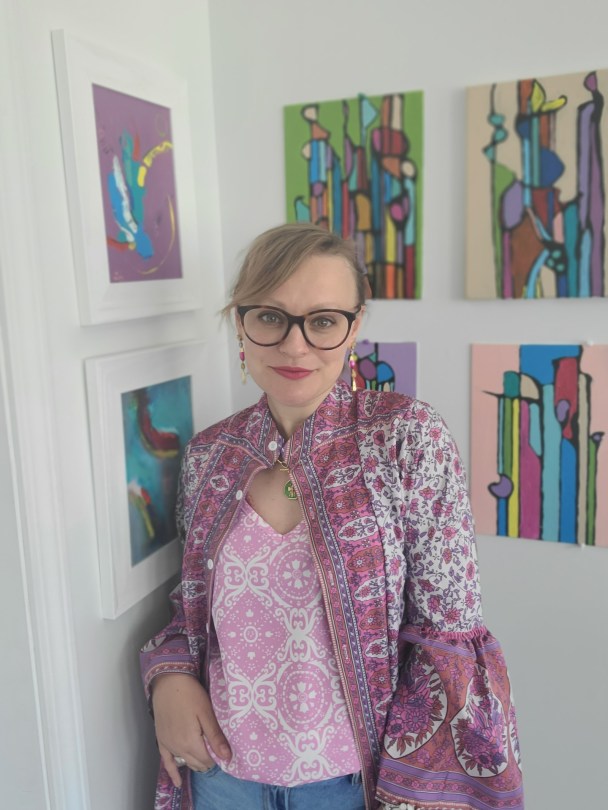
Despite completing her PhD degree in Sociology in 2018, Elena Samarsky decided to become a full-time artist. Since then, she had participation in various solo and group exhibitions. She had her artwork exhibited in art shows in Finland, Spain, UK and across the USA with many awarded as winners and also finalists. She had participated in several artist-in-residency, most recently in Red Barn Studio, Lindsborg, Kansas.
Her first collaboration came in 2021 where she collaborated on an Art and Poetry book “ All other forms of Expression” together with Kansan poet, Timothy Tarkelly.
Influence and Style:
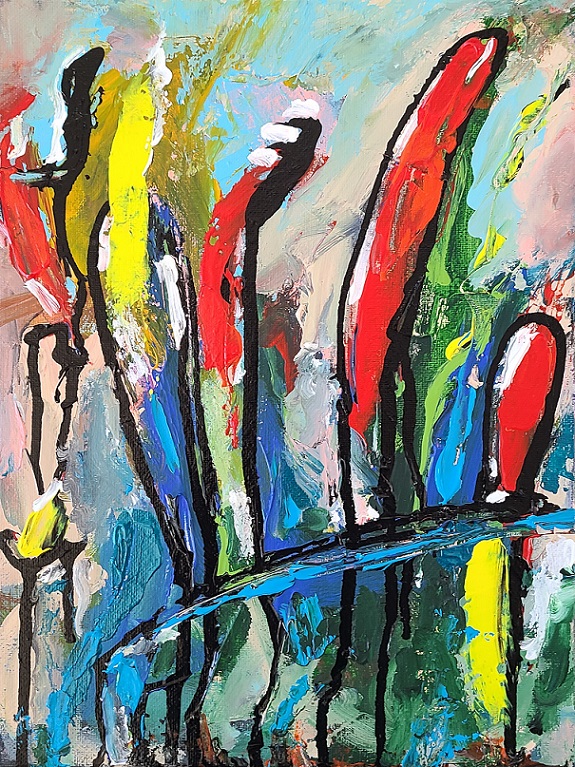
As a self-taught artist, she surrends to motion and color in its purity and fullness. Her intent is not to arrive at a preconceived visual display, but to reach stasis, the elusive balance between feelings of turmoil and stillness of the canvas. By using bold, colorful strokes she arrives at a multi-layered texture that showcases the struggle of creation.
Coming of age in Ukraine she was exposed to Eastern European avant-garde art and iconography.
During her 20’s and 30’s she was fortunate enough to have an opportunity living in Vienna, Berlin, London and submerge in the European art examining it through historical as well as intellectual lenses. And although she had been fascinated with 19th Century and Impressionist art, her practices were influenced by Art Informel, a European equivalent of Abstract Expressionism in the US.
Her relocation to New York City, her exposure to collections of abstract expressionism, has solidified her connection to this form of creation.
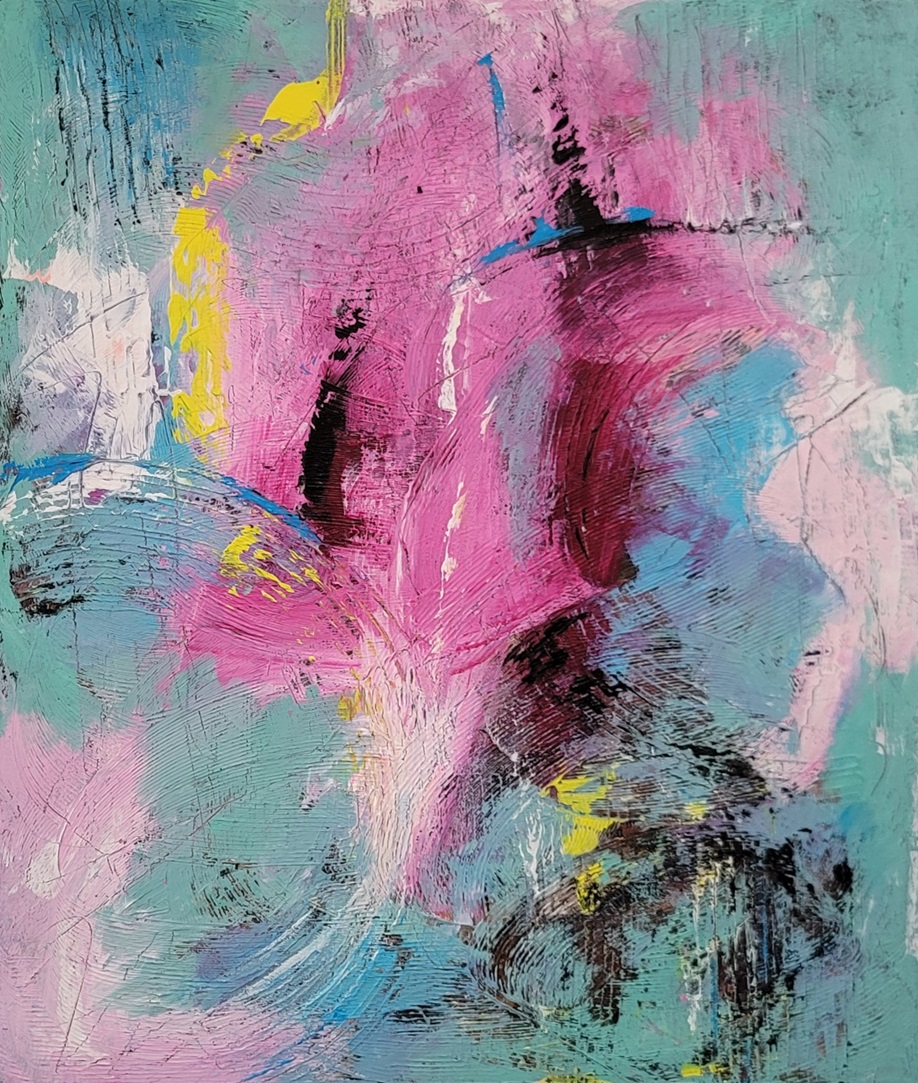
Elena believes that the essence of the art is not the motif but the act of creation itself. In this sense, a finished piece displays the struggle of the material put into motion. The latter describes not only the velocity of the gestures, but also the tensions between brush and canvas, between hand and brush, between paint and tool. The struggle is articulated through broken color, uneven saturation, crude application of the paint, forceful removal or forge of base layers and scratching, scraping, and peeling of the surface. Paraphrasing, the art critic, Harold Rosenberg, at some point the canvas becomes the boundried arena, depicting not a picture but events. This is true for me.
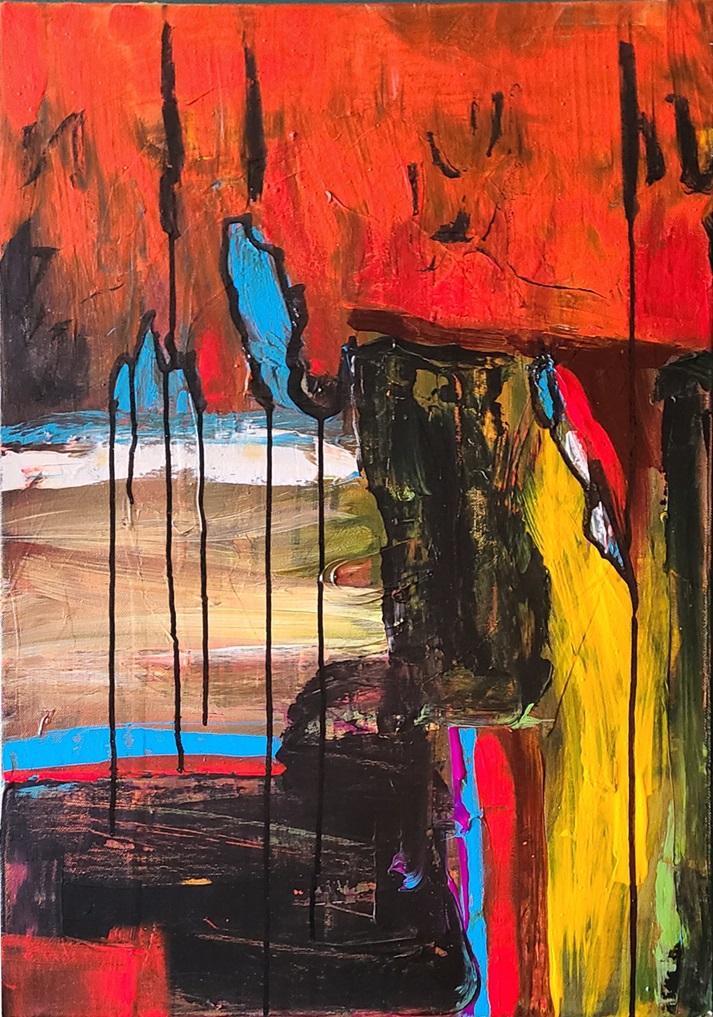
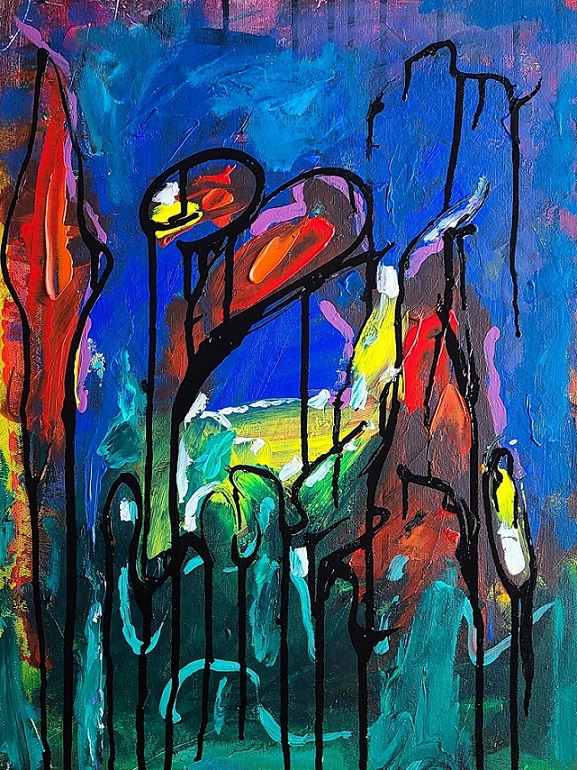
“What’s Lurking Underneath the Black Lines” is the series of work presented in the article.
Elena’s statement regarding this series:
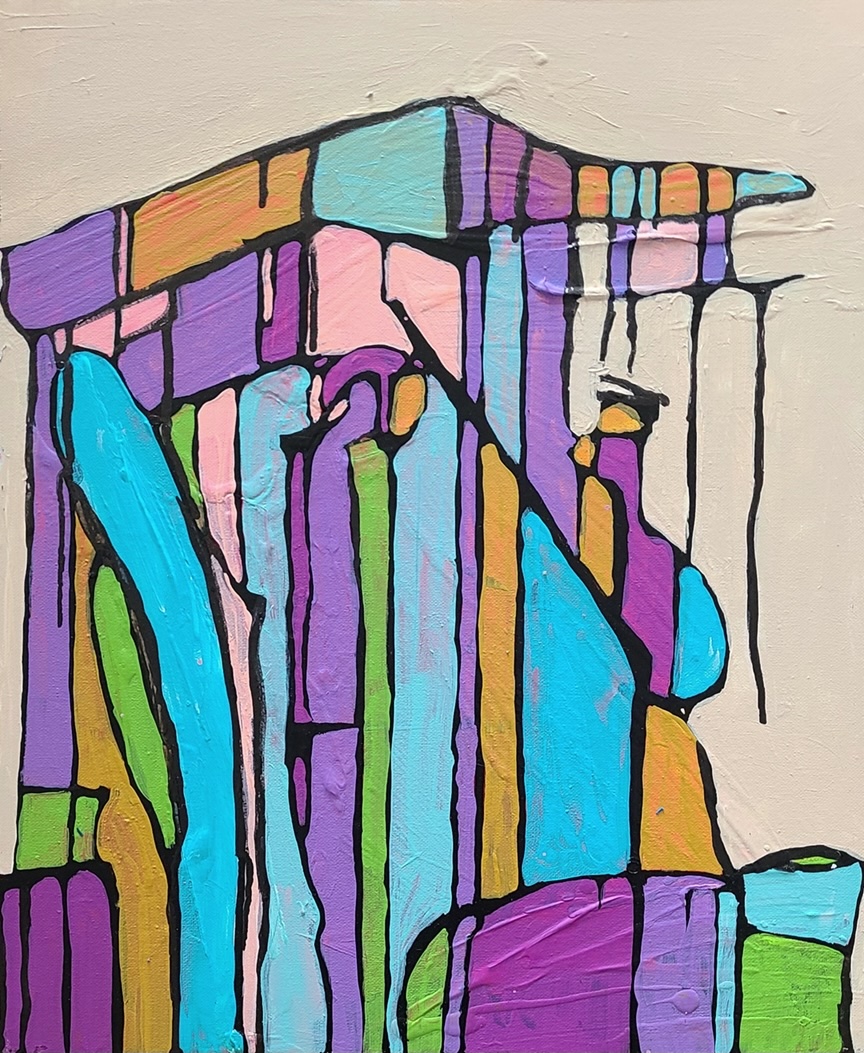
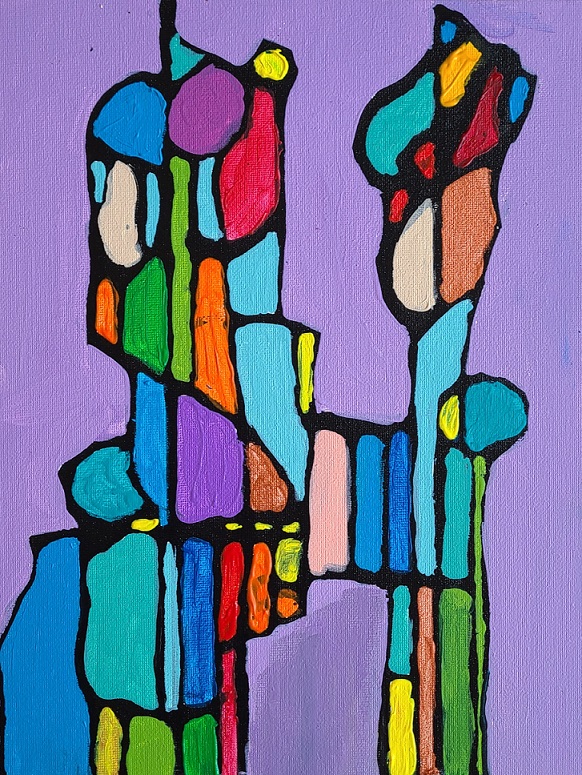
“As a Ukrainian-born artist the war in Ukraine had a tremendous effect on me and my art. The emotional hardship impacted my art as well as my psychological well-being and resulted in a series of mixed media works centered on black ink. In some cases, using the black ink showcases my compartmentalization process of “one small thing at a time”: being unable to grasp the whole canvas, the events, I divide the canvas and paint each segment separately.
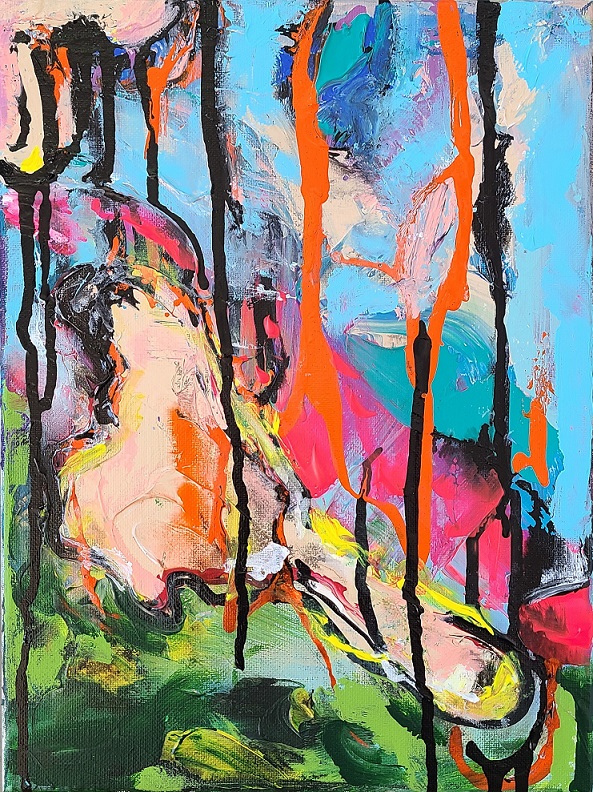
In other cases, the black ink is deliberately applied and let to drip onto the painting at a final stage. Through texture and the stark contrast of bright colors and black structured lines I aim to discuss pain, emotional and intellectual exhaustion, and the clash between the inner emotions and the outer image.
Indeed, the bright colours are applied deliberately referencing a beautiful almost carefree life I have here.
If you didn’t know my personal story, you would think that nothing has changed since the start of the Russian-Ukrainian war.”
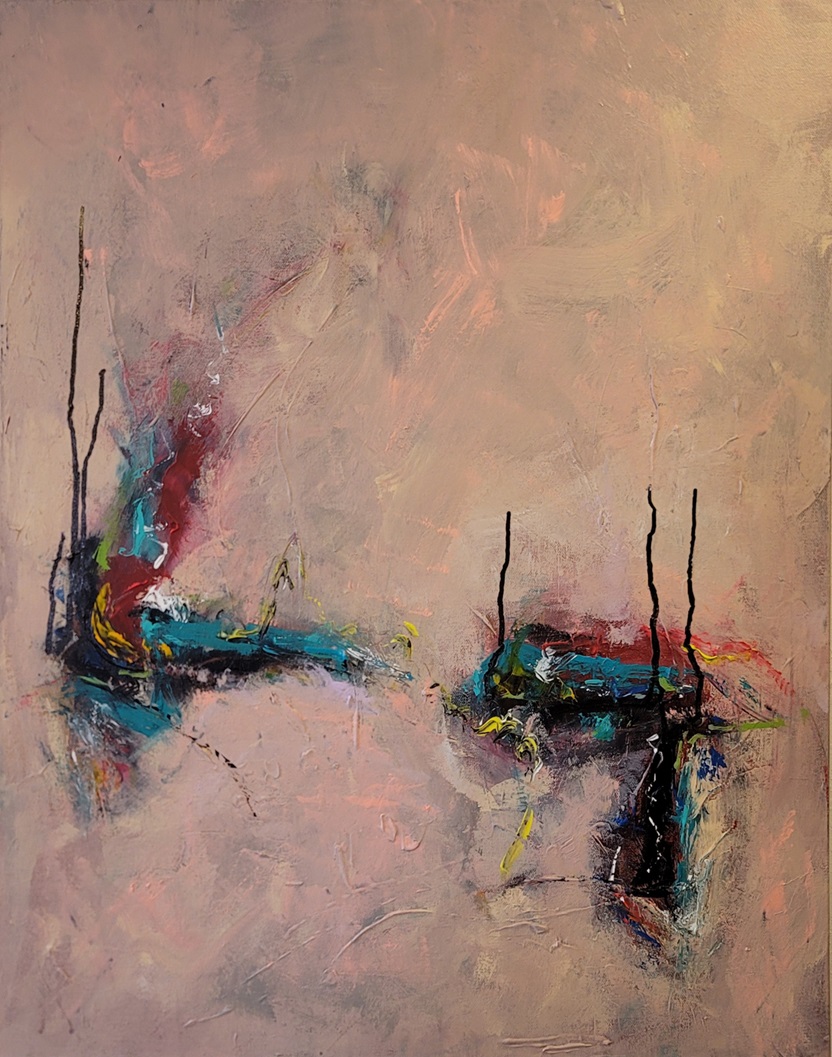
– Looking at different time periods and even other forms of art, which artists influenced your decisions and artistic style?
Having the ability to travel and live in several counties has presented a great opportunity to examine and study art, and while I haven’t started painting until age of 24, several artistic styles held a very powerful place in my appreciation of art and later influenced my own practices. I was always mesmerized by abstract works, and naturally gravitated towards abstract expressionism practices. Growing up in Eastern Europe I was drawn to works by Chagal and Kandinsky: the colors and composition, as well as majestic representation of the subjects, be it more whimsical works by Kandinsky and more dreamy figural works by Chagal. The other strong influence came from the European art scene, in particular Monet’s Water Lily series and J.M.W Turner later works of seascapes. Although the two artists are different in their depiction of the natural world, what draws me into their artworks is the elegance of the movement within the artworks as well as the harmony between lightness and darkness. Finally, my deep connection to abstract expressionism is rooted in “gestural abstraction” – the unapologetic, raw, physical act of painting. I am captivated by De Kooning’s works, especially his “Women” series. His bold strokes and textures capture ferociously both the subject matter and the moment of creation.
– The variety of cultural experiences, from your early exposure in Eastern European avant-garde art and iconography in Ukraine, to Europe and finally New York City seems to have influenced your art process. But how have these diverse cultural influences shaped your artistic choices and creative process in general?
With the rise of internet and social media, we are much more exposed to different styles, practices, and mediums, and while this exposure might seem almost mundane today, for me discovering new artists and old masters across various countries was thought-provoking. It also inspired me to embrace experimentation. I often employ different techniques which result in series of works that are distinct in their character, ranging from light and dreamy nature inspired ones to bold and vibrant heavy-stroke compositions, and finally to my latest works that are centered around black ink and the contrast between bright vibrant colors and almost gruesome dark drips.
Exploring museums and art galleries across Eastern and Western Europe, and later in the US, cultivated a deep appreciation for the universal appeal of the arts that crosses linguistic, cultural, and religious or geographic borders. At the same time, it also highlighted the distinctive character of art practices that emerged in response to specific historical, cultural influences and as a result of experimentation of individual artists. This recognition, together with some self-reflection expanded my awareness of the impact of my personal background and its unique influence on my art.
Indeed, my choice of bold colors in many of my works is deeply rooted in my appreciation for Chagal’s and Kandinsky’s vibrant works, while my gravitation towards graceful yet vigorous composition in other works is inspired by Monet and Turner. In my later works, I use the black-ink structural lines, which sometimes resemble Chagal’s stained glass works in church windows across the world. However, the strongest influence on my practice comes from abstract expressionism. For me the essence of art is not the motif but the act of creation itself. My intent is not to arrive at a preconceived visual display, but to reach stasis, the elusive balance between feelings of turmoil and stillness which is reflected in a distinctive composition of colors and multi-layered texture. The labor-intensive work with the canvas is cultivated through forceful and almost subconscious brush work, crude application of the paint, uneven saturation, and forceful removal or forging of base layers. Paraphrasing the art critic Harold Rosenberg, at some point the canvas becomes the bounded arena, depicting not a picture but an event. This is true for me.
– Transitioning from sociology to a full-time self taught artist is a significant change. Have you at some point felt that there is a risk to what is following?
Yes, it was a scary and, in a way, unexpected move. I started to paint later in life, and being an artist was not in a consideration for a career path. When I was doing my PhD in sociology at the University of Oxford I had my first ever exhibition, which was also a solo exhibition. While I was excited about it, I could not imagine that a few years later, my art will become a primary focus of my life. But at some point, it just felt right. I feel very privileged and lucky to have a supportive husband and family. They not only encourage me to follow my passion but also support me financially.
– Did your social science background somehow influence your artistic path?
I get this question a lot. As a qualitative sociologist, I would conduct in-depth interviews with research participants and what I loved about my research is the opportunity to study the heterogeneity of human experience. I chose the field because I was always fascinated by how others experience life. As a visual artist I feel I have the same privilege to connect to people and to be exposed to some aspects of their lives. Discussing art in general, or its process, or a specific art piece creates the space for an intimate conversation and allows us to gain a better understanding of the artist’s and the viewer’s experiences, emotions, and opinions. Those encounters highlight the uniqueness of a person’s life journey. I remember one encounter with a buyer telling me that the specific painting she acquired evoked her childhood memories. We had a heartfelt conversation about those special memories from childhood we cherish and what triggers those memories. In this sense, being an artist not only provides an outlet for my creativity but also continues to gratify my scholarly curiosity into the extraordinary nature of human experience.
– Collaborating on the “All Other Forms of Expression” art and poetry book must have been a unique experience. How did this collaboration come about, and how did the synergy between visual art and poetry enhance the overall project?
Yes, it was a unique and thought-provoking experience. I met Timothy Tarkelly during my art residency at OAC, Belle, Missouri. Timothy and I shared the common space in the main house, and while he would work on his new book of poems, I was painting. Working in the same area created the space for a conversation about art, our practices, perceptions and understanding of the creative process as well as the outcome, be it a poem or a painting. We occasionally talked about each other’s works, their interpretations, and the emotions they evoked. It was fascinating to see when those converged and when those differed reflecting our unique personal experiences and backgrounds. That was the starting point. Collaborations are not always easy, but for us it came about in such an organic way. We both have a similar outlook on life and the way we articulate it through art. What draws me into Timothy’s work is his ability to approach complex and sensitive subjects with grace and wittiness. This intricacy results in a multilayered experience for the reader. And it is exactly what I seek to accomplish in my paintings.
It was a true synergy, we commented on each other’s works, and chose paintings, and poems that spoke to both of us. Sometimes we worked separately creating each piece with a chosen subject in mind, in other cases Timothy wrote poems for a specific artwork created earlier. Our intense work of almost six months has resulted in a collection of 40 paintings and 40 poems of the same title that addressed our chosen subject matter and showcased our own interpretations in a unique complementary way. As I said before, sometimes our interpretation converged while in other cases they diverged. In both cases, the combination of the visual and written form elevated the overall discussion of the subject matter and added dimensionality and depth.
– Will you be open to another similar collaboration? (not necessarily poetry but any other form of art)
Yes of course. I think collaborations between artists can be very enriching. The process of collaboration itself can be very inspiring and the creativity that emerges can flourish in so many unexpected ways. I also believe it can be very rewarding for the viewer or listener as it provides a multidimensional experience that engages several of our senses, making it a more unique experience.
– How difficult was it for you to sit in the studio and try to create whilst the war was in progress. How did you manage to overcome and focus?
To be honest – it was easy. Going into the studio and painting was one of the ways to disconnect from the terrifying news. Submerging into the creative process allowed me to create an outlet for the pain, experience my emotions and to confront them in a healthier way. Besides, while it was and still is a challenge to talk about the destruction of my childhood home and death in the family that occurred due to the war, painting served as a medium to have that conversation with myself and subsequently with others. When I got the news about my grandfather passing away, I could not vocalize it, and I didn’t talk about it for a few months, but right after receiving the phone call I went into the studio and created a painting. It was a surreal state of being absent and becoming a vessel to a deep, subconscious state of mind. This state of almost unconscious creation provided an immediate outlet and opened the space to slowly start comprehending the event. The act of painting has also provided a sense of purposefulness, power, and control. Being so far away from the family in Ukraine I was overwhelmed by feeling of powerlessness, working with the canvas allowed me to reclaim some control over my life.
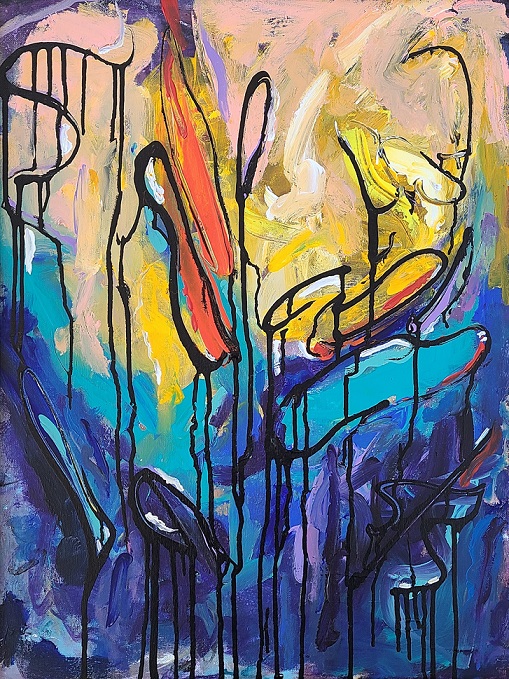
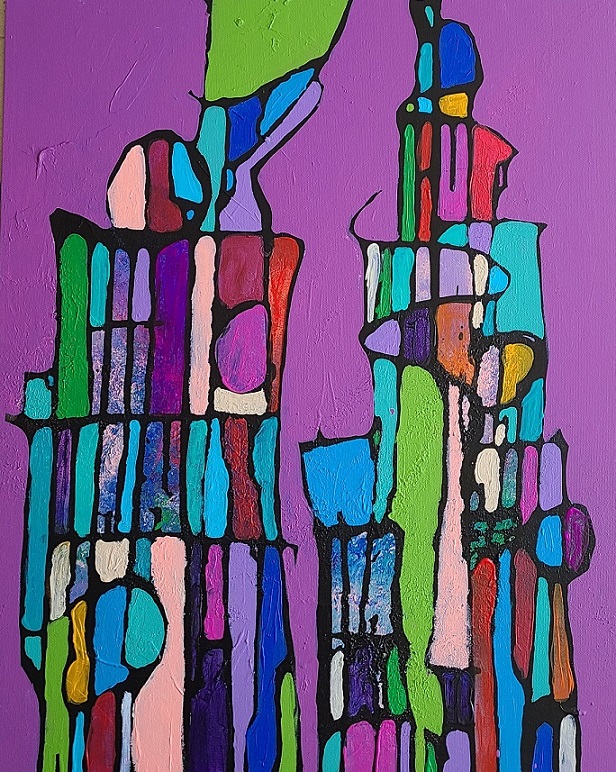
– You have mentioned that the series “What’s Lurking Underneath the Black Lines” is deeply tied to your personal experiences with the war in Ukraine. Can you discuss how this emotional hardship has translated into your art, especially the use of black ink?
I started to experiment and incorporate black ink a year before the war in Ukraine began, but it became much more pronounced in my works since the start of the war. Reflecting on it, I can see how it impacted my process in two distinct ways. Of course, at the time of creation it seemed as one seemingly subconscious and continuous process, stripped of intent, but once I have had a substantial amount of works, I could identify these two patterns and try to decipher the meaning behind the practice. The first practice was a continuation of my usual routine of playing with bright colors and surrendering to the motion of creation, but once the painting was done it just didn’t feel right. It did not seem to reflect the darkness, sadness that I was harboring inside – and this was the time when the black ink was applied. The outcome resembled teardrops, or bloody scars that sore the eye and break the bright and happy mood by bringing the sadness and complexity of my emotions into the painting. However, other days it was challenging to start painting, and this is when the second pattern emerged. I started the painting by pouring the black ink and let it bleed on the canvas, creating a road map. After the ink dried up, I would paint each section separately, one section at a time. I have learned that this was very therapeutic practice. It distracted me from the emotional overload of conflicting emotions, that can be overwhelming and paralyzing, and this practice allowed me to disentangle these emotions and break down the painting process into much smaller tasks that I felt comfortable to approach. One small block at a time, one emotion at a time until the canvas became a whole finished piece that reflected turmoil inside of me. Being a very private person, I like the fact that unless you know my story, and the meaning of the use of the black ink, these paintings can still be interpreted in various ways – they are bright, vibrant, and can be uplifting.
– What are your future plans and how do you see your art evolving in the recent future?
I have started working on my new project “Go big or go home” later this month and experimenting with 2×4 feet and larger canvases. It’s exciting and terrifying at the same time to face such a large blank canvas, but I am thrilled to see how the size of the canvas will impact my creative flow. I am also a very active artist and always looking for opportunities to exhibit my work. There are several exhibitions and shows for 2024 and two art residencies, one in Kansas and one in Missouri, that I am looking forward to participating in. I appreciate those settings and participate in at least one residency each year. Residencies provide a great opportunity to meet with artists across disciplines, opportunity to collaborate in the most unexpected ways, opportunity to learn new practices as well as reflect on my own. And finally, life is unpredictable, we don’t know what the future holds, and I personally embrace the thrill of the unknown. I didn’t know I would start painting at the age of 24 or decide to become a full-time artist at 38. I hope to continue having the courage to dare, to have the strength to embrace and learn from life’s lows, flourish in the highs, and seize the moment with fearlessness.
 artCollective Magazine